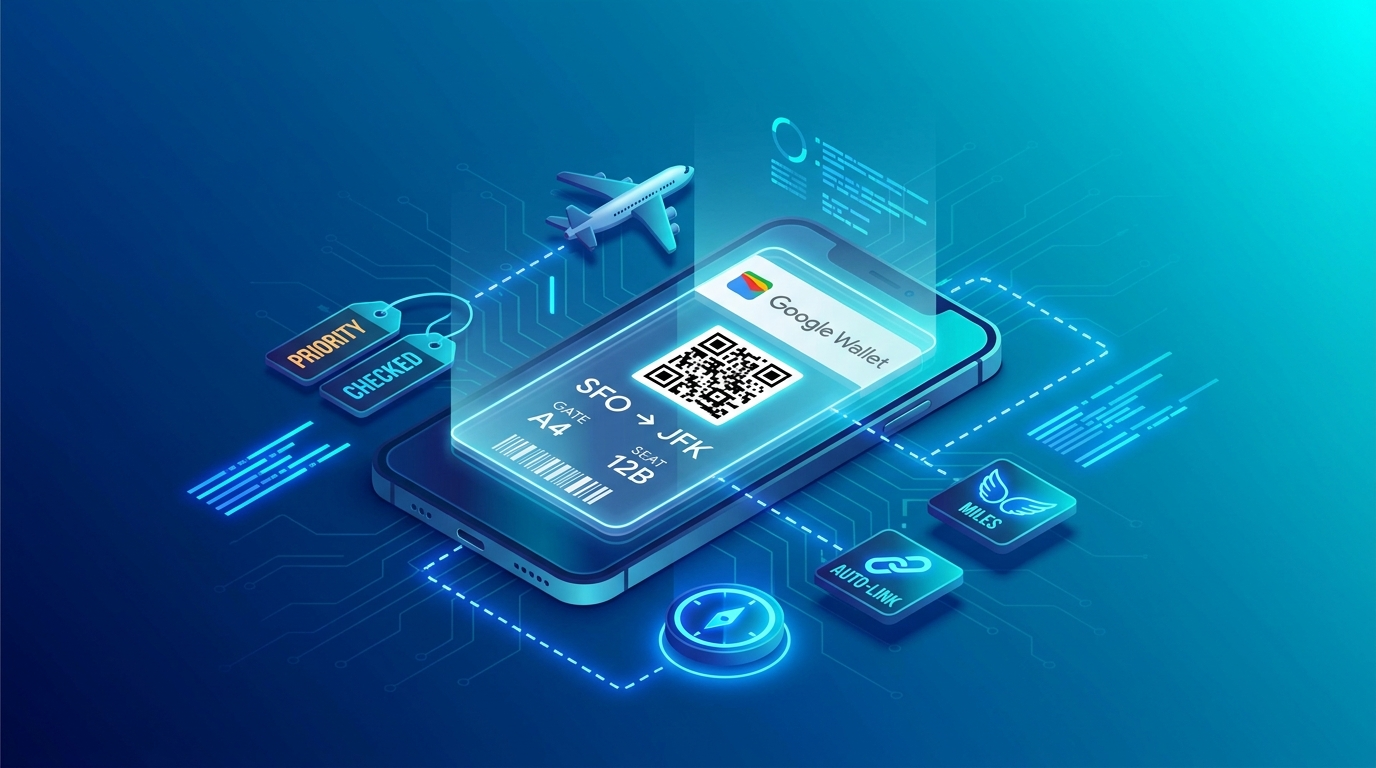
Unlock Google Wallet Frequent Flyer Sign Ups with Auto Linked Passes
Google Wallet frequent flyer sign ups are becoming frictionless as the tech giant automates loyalty program enrollment directly through its digital wallet platform. At Google I/O 2026, the company unveiled a suite of travel-focused features designed to eliminate the manual steps travelers typically endure when joining airline loyalty programs, signaling a fundamental shift in how passengers interact with their frequent flyer benefits before, during, and after flights.
The flagship innovation centers on auto linked passes, a system that automatically enrolls users in airline loyalty programs and synchronizes their frequent flyer credentials with Google Wallet’s boarding pass infrastructure. Instead of navigating airline websites, confirming email addresses, and manually linking wallet passes, travelers can now complete enrollment in seconds through their phone. This capability emerged from Google’s broader push to consolidate travel logistics into a single digital hub, reducing the cognitive load of managing multiple airline accounts and reducing friction at check-in.
Azul Airlines, Brazil’s largest carrier, became an early adopter of this automated integration, leveraging Google Wallet APIs to streamline its loyalty card integration process. The partnership demonstrates how airlines benefit immediately: passengers flying on Azul can now add their frequent flyer membership directly to their wallet during booking or check-in, with flight tracking data flowing seamlessly into the digital pass. This eliminates a critical abandonment point where many travelers simply forget to enroll because the process feels disconnected from the booking experience.
The technical architecture behind this relies on Google Wallet’s official developer APIs, which enable airlines to trigger automated enrollment workflows tied to specific passenger transactions. When a traveler books or checks in for a flight, the airline’s system can now push an enrollment prompt directly to Google Wallet, complete with pre-filled loyalty program details and security credentials. The user simply confirms, and the frequent flyer card appears alongside their boarding pass. This represents a departure from traditional mobile wallet implementations, where adding credentials required multiple manual steps.
Security and privacy considerations take center stage in this automated framework. Unlike one-time manual enrollment, auto linked passes involve ongoing API communication between airline backend systems and Google Wallet infrastructure. Google has implemented encryption protocols to protect frequent flyer account numbers, personal identification data, and loyalty balance information during transmission and storage. Frequent flyer data remains encrypted on-device until needed for transaction processing or balance verification. Airlines must comply with stringent security credentials requirements before gaining API access, including OAuth 2.0 authentication and regular security audits. Users retain granular control over which loyalty programs can access their wallet data, and can revoke permissions instantly through wallet settings.
Comparing Google Wallet’s travel ecosystem to Apple Wallet reveals meaningful architectural differences that favor the seamless enrollment approach. Google’s Android developer platform advances include tighter integration with back-end airline systems, enabling real-time flight tracking and live lockscreen updates for boarding passes. Apple Wallet handles boarding passes and membership cards effectively, but lacks the same automated enrollment layer connecting booking systems directly to pass provisioning. Google’s approach also integrates tailored travel loyalty offers directly into the wallet interface, surfacing status-matched perks and dining rewards relevant to each passenger’s flight itinerary.
The expanded auto linked passes ecosystem now encompasses digital baggage tags, real-time luggage tracking, and integrated travel offers coordinated with partner hotels and dining venues. When a traveler checks in with their auto-enrolled frequent flyer account, the system simultaneously activates baggage tracking through their wallet, displaying estimated arrival time at baggage claim and sending notifications if delays occur. Travel loyalty offers appear contextually, showing lounge access promotions, dining discounts at the destination airport, or hotel upgrade opportunities tied to the passenger’s elite status and booking details.
Developer implementation of Google Wallet frequent flyer integration requires adherence to strict API specifications and timeline commitments. Airlines must evaluate outsourcing software development if they lack in-house mobile wallet expertise, as integration timelines typically span six to eighteen months depending on legacy system complexity. Google provides sandbox environments for testing, comprehensive API documentation, and dedicated technical support during deployment. Gokmen Goksel, leading Google’s mobile payments strategy, emphasized that rollout timelines vary by region, with North American and European carriers gaining access first, followed by carriers in Asia-Pacific and Latin America. Azul Airlines’ loyalty program expansion serves as a model, having achieved full API integration within nine months of announcement.
The broader implication of automated frequent flyer sign-ups extends beyond convenience. By removing enrollment friction, Google Wallet and its airline partners create stronger first-time loyalty program activation rates, directly translating to increased recurring travel and higher lifetime customer value. Passengers who enroll automatically on their first booking tend to accumulate miles more consistently, creating behavioral lock-in effects. For travelers, the efficiency gain is immediate: fewer passwords to remember, fewer duplicate accounts across devices, and loyalty benefits accessible the moment they need them. As global airline adoption accelerates through 2026 and beyond, the fragmented world of loyalty program management will increasingly consolidate into unified digital wallet experiences, reshaping how airlines compete for frequent traveler engagement.